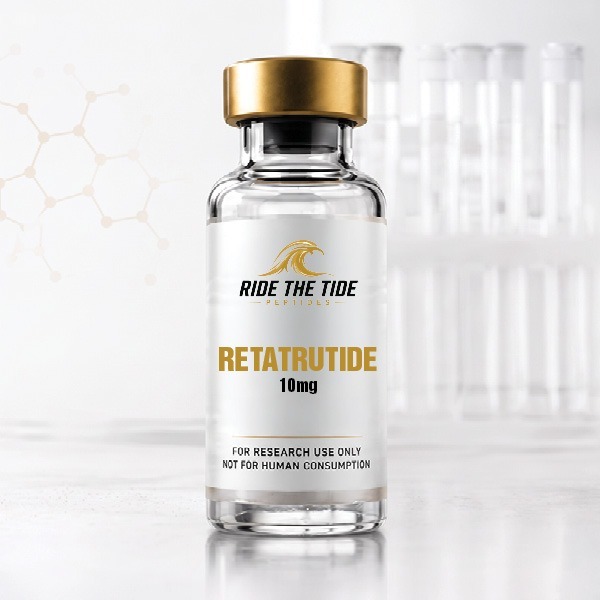
Description
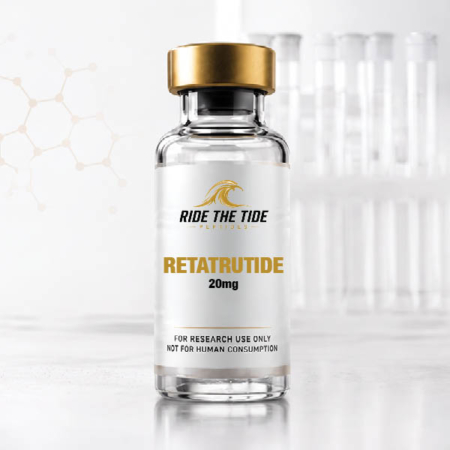
Retatrutide 10 mg — Metabolic Research Peptide
Retatrutide, also known as LY3437943, is an investigational peptide that activates three hormone receptors: GIP, GLP-1, and glucagon. These signalling systems influence how the body responds to nutrients, regulates glucose, and manages energy.
Its combined receptor activity has made retatrutide a subject of research into obesity, glucose regulation, and related metabolic conditions.
Research Highlights
Three receptor targets: GIP, GLP-1, and glucagon receptor activity within a single molecule.
Energy balance: Investigation into the relationship between food intake, energy expenditure, and body weight.
Appetite signalling: Research examining pathways associated with hunger, fullness, and food intake.
Glucose metabolism: Studies assessing blood glucose regulation and related metabolic measures.
Liver research: Investigation into changes in liver fat and associated metabolic outcomes.
Ongoing clinical evaluation: Research assessing potential therapeutic applications alongside safety and tolerability.
These highlights describe the investigational molecule’s research profile. They do not establish benefits or validate the quality of an individual research product.
Metabolism, Appetite & Energy Balance
Energy balance involves several interacting systems, including appetite signals, nutrient availability, and energy expenditure. Retatrutide allows researchers to investigate how activating three hormone receptors together influences these processes.
GIP and GLP-1 signalling contribute to the body’s response to food, including glucose-dependent insulin secretion. GLP-1 activity also influences appetite and gastric emptying. Glucagon receptor activity adds another component involving liver glucose production and energy metabolism.
Researchers examine how these actions interact, rather than assuming each receptor produces an isolated effect. Questions include how changes in food intake relate to body weight and how glucose regulation changes during treatment.
Liver Metabolism & Cardiovascular Investigation
Liver Metabolism
The liver plays a central role in processing nutrients, storing energy, and regulating circulating glucose. Retatrutide research includes investigation into liver fat and metabolic dysfunction-associated steatotic liver disease, or MASLD.
Researchers assess whether changes in liver measures accompany changes in body weight and glucose regulation, and what those findings may mean over time.
Cardiovascular Investigation
Retatrutide is also being evaluated in research involving cardiovascular outcomes. Changes in weight or metabolic markers alone do not prove protection against heart attack, stroke, or other cardiovascular events; those questions require dedicated outcome studies.
Safety assessment remains essential. Published research has reported gastrointestinal adverse events and increases in heart rate, reinforcing the importance of evaluating potential benefits alongside risks.
What Makes Retatrutide Scientifically Distinct?
Retatrutide’s main distinguishing feature is its receptor combination.
Semaglutide activates GLP-1 receptors. Tirzepatide activates GIP and GLP-1 receptors. Retatrutide activates GIP, GLP-1, and glucagon receptors.
This provides a basis for investigating how glucagon receptor activity changes the response to combined incretin signalling. It does not automatically establish that retatrutide is safer, more effective, or suitable for a particular research protocol.
Considerations for Laboratory Researchers
When selecting research material, the compound name and stated vial quantity are only part of the assessment. Researchers should also consider:
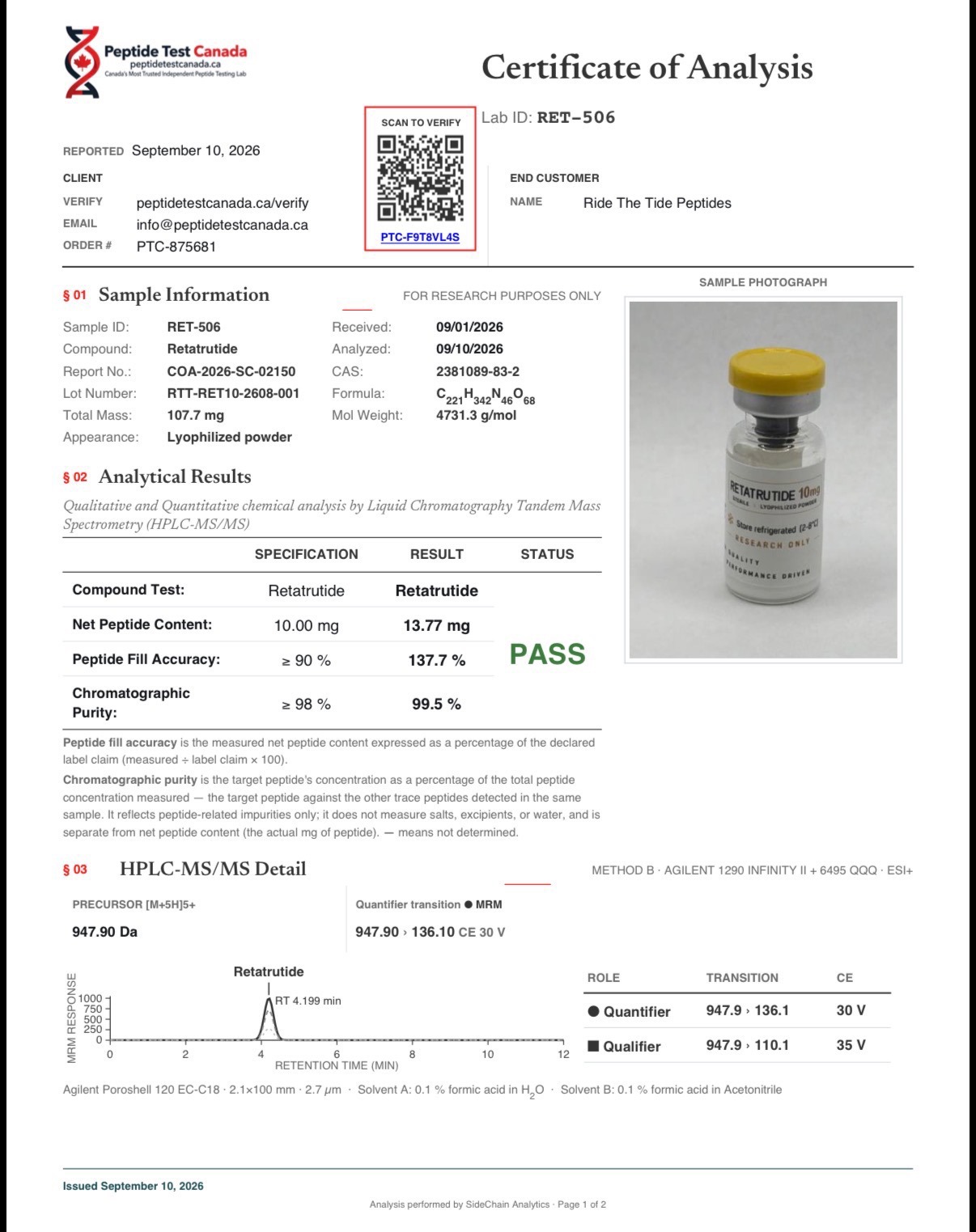
Documentation supporting identity and peptide content.
Whether analytical results correspond to the supplied batch.
The methods used and limitations of available testing.
Storage and handling requirements.
Suitability for the intended laboratory protocol.
A purity percentage alone does not establish sterility, absence of endotoxins, or suitability for administration.
Storage & Handling
Lyophilized powder — unopened vial
Store refrigerated at 2–8°C in the original sealed vial.
Protect from light and moisture.
Keep the vial tightly sealed until needed.
Avoid repeated temperature swings and freeze–thaw cycles.
These storage instructions apply to the unopened, lyophilized product only.
Frequently Asked Questions
What is retatrutide?
Retatrutide is an investigational peptide studied for its combined activity at GIP, GLP-1, and glucagon receptors.
Why is it called a triple agonist?
An agonist activates a receptor. “Triple agonist” means retatrutide activates three distinct receptor types within one molecule.
Is retatrutide the same as “GLP-3”?
No. “GLP-3” is an informal nickname, not the scientific name for retatrutide or its receptor profile.
What does the 10 mg label mean?
It refers to the stated peptide quantity per vial. It is not a recommended dose, concentration, or administration instruction.
What is retatrutide being investigated for?
Research includes obesity, type 2 diabetes, liver disease, and cardiovascular and renal outcomes, among other areas. Investigation does not mean that effectiveness has been established for every condition.
Is this product intended for personal use?
No. This product is offered for laboratory research only and is not intended for human or veterinary administration.
Laboratory Research Only
Not for human or animal administration. Information on this page describes scientific research and does not provide medical advice, dosing instructions, or treatment recommendations. Research findings are not guarantees of experimental results.